Jonas Vogel · 31 August 2026
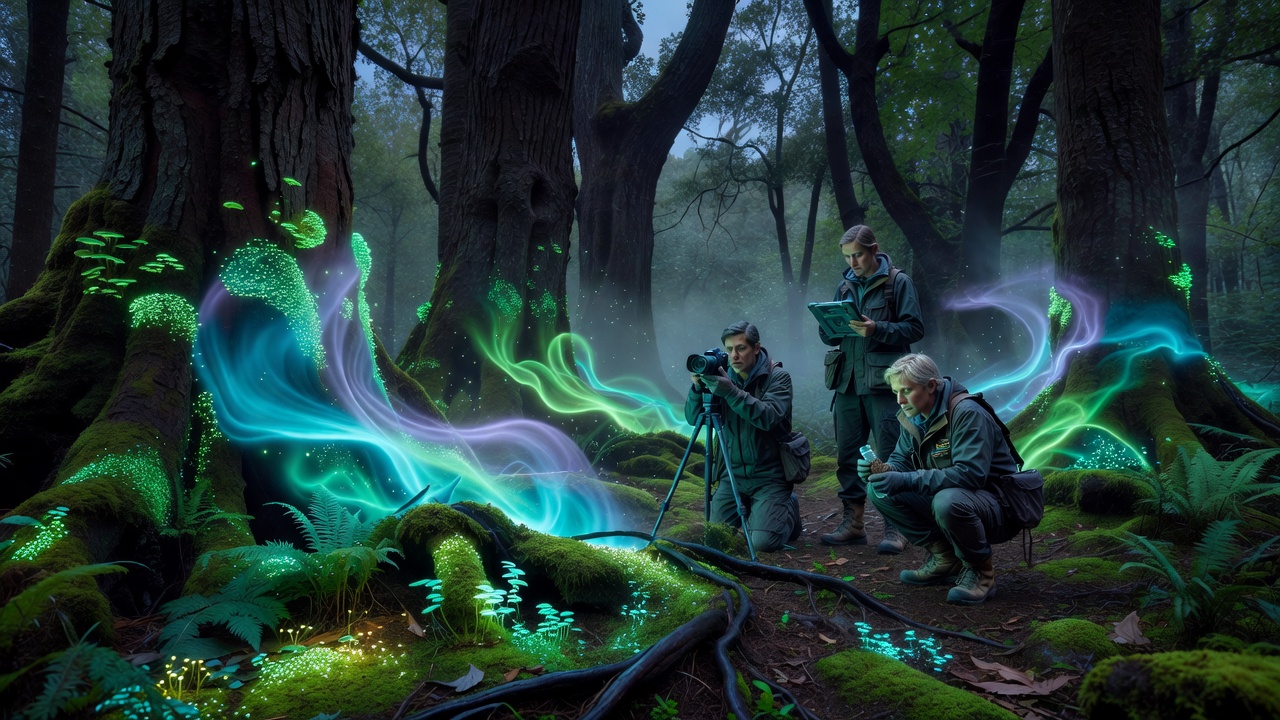
Researchers monitoring Lumenwald Forest have documented a series of intense bioluminescent surges in the central core region over the past six weeks. These events, characterized by sudden increases in light emission from fungal networks and understory vegetation, reached peak intensities 45 percent above baseline levels recorded in prior seasons. Data loggers positioned at 12 fixed stations captured synchronized pulses lasting between 90 and 210 seconds, primarily between 23:00 and 02:00 local time.
Measurement Techniques and Findings
Teams deployed multispectral sensors and time-lapse cameras to quantify wavelength distribution and spatial extent. The dominant emissions fall within the 510–530 nanometer range, consistent with luciferin-based reactions in endemic fungi. Temperature and humidity readings show a strong correlation with surge frequency, with events clustering after nights when soil moisture exceeds 68 percent. No corresponding spikes in ambient electromagnetic activity or seismic data were observed, ruling out external geophysical triggers. Sample collection from affected mycelial mats revealed elevated levels of a previously undocumented cofactor that appears to accelerate the oxidation cycle.
Wildlife cameras positioned near surge zones recorded increased activity among nocturnal insects and small mammals, though no behavioral disruption was evident. Aerial drone surveys confirmed that the illuminated patches remain confined to a 1.8-kilometer radius within the core, with sharp boundaries aligning to existing soil-type transitions.
Ecological Context and Ongoing Monitoring
Long-term vegetation plots indicate that areas experiencing repeated surges exhibit a 12 percent rise in understory biomass compared with control sites. Researchers hypothesize that the light pulses may enhance nutrient cycling by attracting pollinators and decomposers during peak activity windows. Continued surveillance through the upcoming dry season will test whether the pattern persists or diminishes with reduced moisture availability.
Public access to the core remains restricted to preserve sensor integrity and minimize light pollution interference. Preliminary models suggest that if surge frequency continues at current rates, annual energy transfer through the bioluminescent pathway could account for up to 3 percent of the forest’s net primary productivity. Further isotopic tracing studies are scheduled to clarify the precise metabolic pathways involved.